 TutorialKart.com
In this SAP SD tutorial, you will learn how to define sales organization in SAP using transaction code OVX5 and the SPRO customizing path. A sales organization is one of the main enterprise structure units used in Sales and Distribution, so it should be created carefully before sales document processing is tested.
This guide covers the meaning of a sales organization, the prerequisites to decide before configuration, the step-by-step OVX5 process, important fields, follow-up assignments, and common checks after saving the sales organization.
What is Sales Organization in SAP SD?
In SAP, sales organization represents an organizational unit used to control the distribution and sales of goods and services in an organization. It is the selling unit that negotiates sales terms and conditions with customers and is responsible for sales-related business transactions.
A sales organization must be assigned to at least one company code in SAP before it can be used completely in the SD enterprise structure. In sales documents, the sales organization works together with the distribution channel and division to form a sales area.
Sales Organization Role in SAP SD Enterprise Structure
Before creating a sales organization in SAP, understand where it fits in the SD structure. A sales organization is normally created for a selling legal unit, business unit, or regional sales responsibility. It is then connected with other organizational units so that sales orders, deliveries, billing, pricing, and reporting can use the correct organizational data.
- Company code assignment: Connects the sales organization to financial accounting.
- Distribution channel: Represents the channel through which goods or services are sold, such as wholesale, retail, or direct sales.
- Division: Represents a product line or product group used in SD processing.
- Sales area: The combination of sales organization, distribution channel, and division.
- Plant assignment: Supports sales and delivery processing when products are delivered from a plant.
For official reference, SAP describes a sales organization as the unit responsible for sale and distribution of goods and services. You can refer to the SAP Help Portal pages for Sales Organization and Sales Area for standard SAP terminology.
Prerequisites Before You Create Sales Organization in SAP
Keep the following details ready before using transaction code OVX5. This prevents repeated changes to enterprise structure settings later in the implementation.
- Four-character sales organization key: Decide a stable key such as 1000, 2000, IN01, or US01 based on your project naming standard.
- Description: Use a clear business description that helps users identify the selling unit.
- Currency: Maintain the currency used for SD processing and reporting where applicable.
- Calendar: Select the relevant factory or sales calendar if your process uses calendar-based checks.
- Address details: Maintain the official address used for outputs, forms, and correspondence.
- Transport request: Customizing changes should be saved under the correct request so they can be moved to quality and production systems.
Transaction Code and SPRO Path to Define Sales Organization in SAP
You can define sales organization in a SAP system by using one of the following navigation methods.
- Transaction code: – OVX5
- Menu Path: –SPRO (tcode) –> SAP Customizing Implementation Guide –> Enterprise Structure –> Definition –> Sales and distribution –> Define copy, delete, check sales organization.
Step-by-Step Configuration to Define Sales Organization in SAP Using OVX5
Step 1) Enter T-code “OVX5” in SAP command field as shown below and press enter to continue.

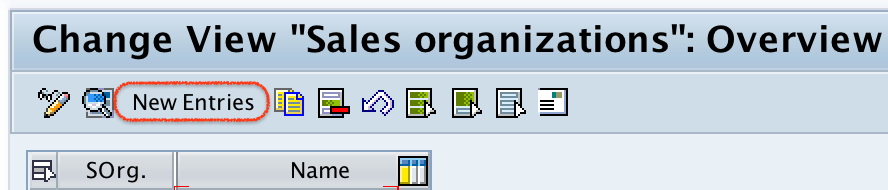
Step 2) On change view sales organizations overview screen, click on new entries button to create a new sales organization unit as per the requirements.
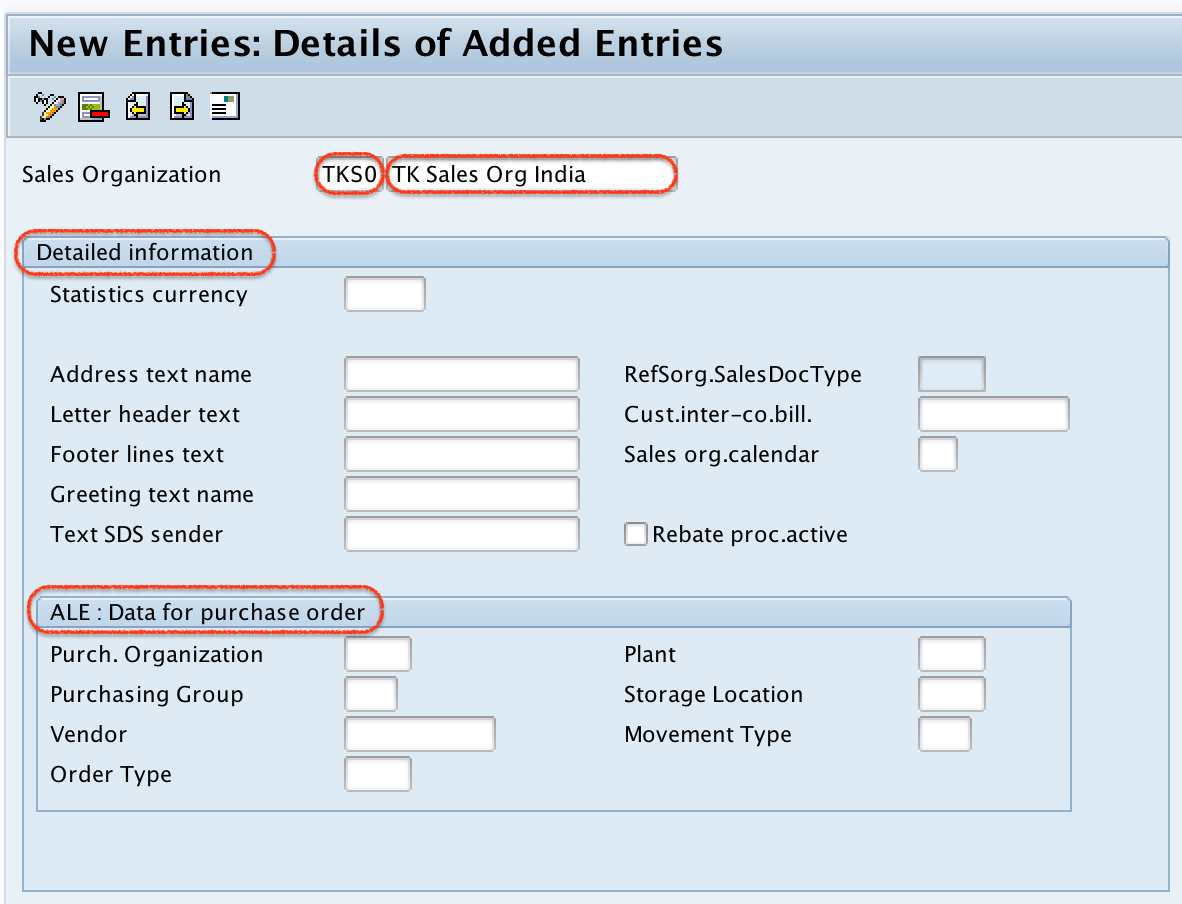
Step 3) On new entries screen, update the following details.
- Sales organization: – Update the four digits key that identifies the sales organization in SAP.
- Description: – Enter the descriptive text of sales organization.
- Detailed Information: – Under detailed information, you can required details like currency, Address text, letter header text, footer header text, Sales.org calendar, etc.
- ALE: Data for purchase order: – Under this option, you are required to enter the details like Purchase organization, Purchasing group, Plant, storage location, etc.
- After updating the details, press enter.
| Field in OVX5 | Purpose while defining sales organization |
|---|---|
| Sales organization | Unique four-character key that identifies the selling unit. |
| Description | Text shown in configuration and selection screens. |
| Currency | Currency used for the sales organization where the field is maintained. |
| Sales organization calendar | Calendar used for sales-related date checks where applicable. |
| Address text and letter text | Text elements used in correspondence and output forms. |
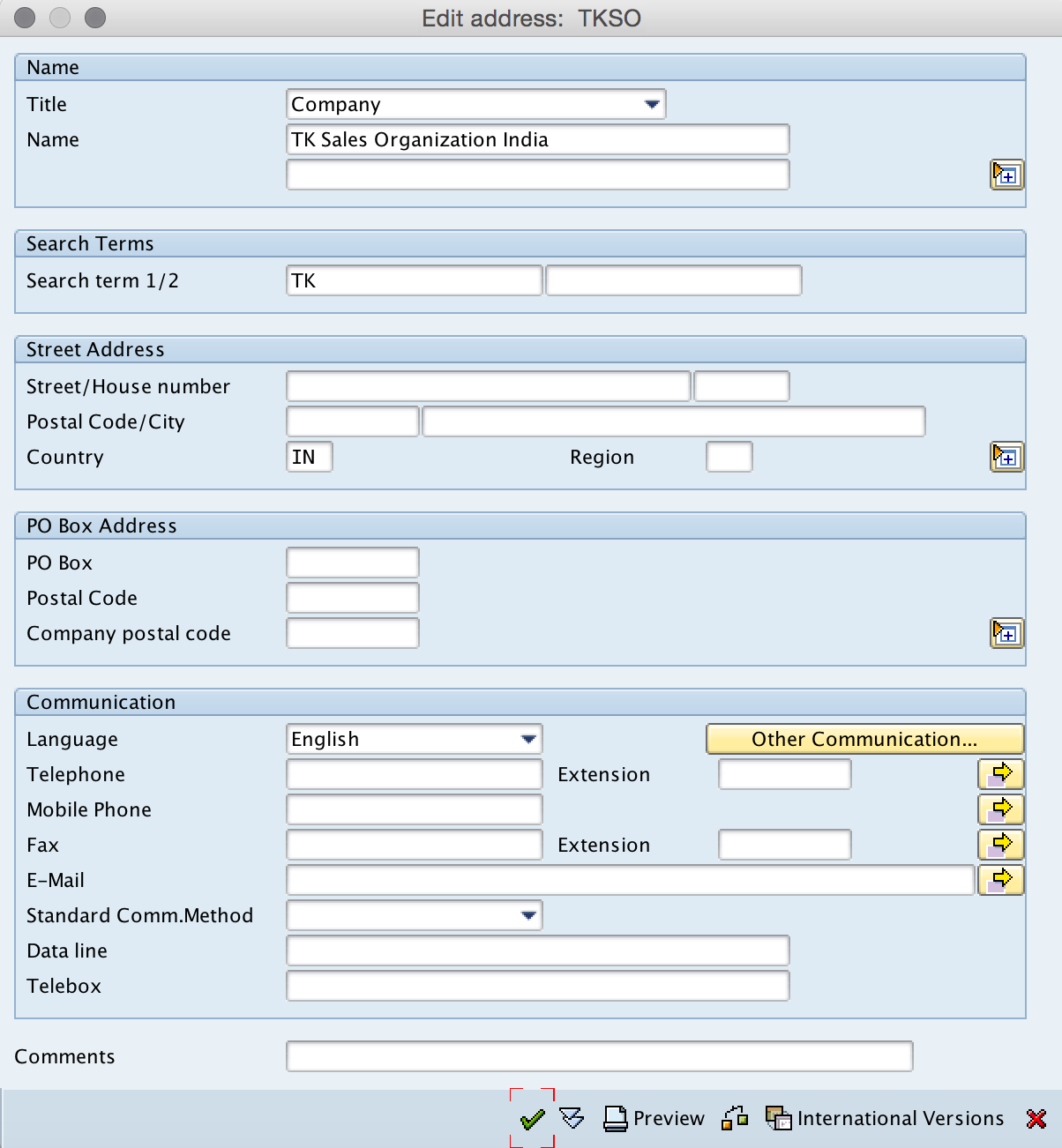
Step 4) Now you are required to update the sales organization address details.
Maintain the address carefully because it may be used in outputs, customer communication, print forms, and legal correspondence depending on your SD output configuration.
Step 5) After maintaining all the required details, click on save button.
Now you are prompted for customizing request, create new request or choose existing request and save the data.
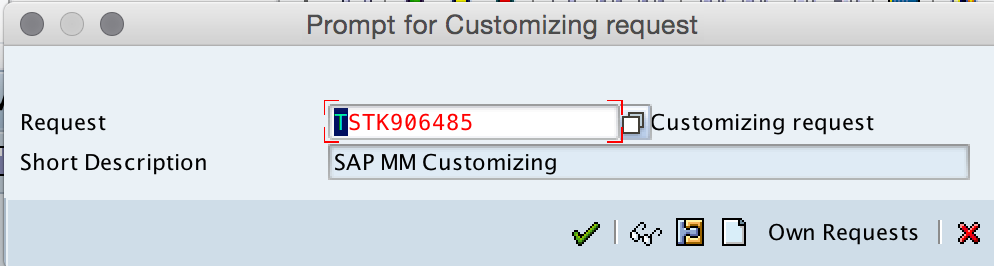
Successfully we have defined sales organization in SAP systems.
Configuration Required After Defining Sales Organization in SAP
Creating the sales organization is only the first step. To make it usable in SAP SD transactions, complete the related enterprise structure assignments according to your project design.
- Assign sales organization to company code: Required for financial integration and accounting relevance.
- Define distribution channel and division: Required to build sales areas for SD documents.
- Assign sales organization to distribution channel: Allows the sales organization to use the required selling channels.
- Assign division to sales organization: Allows product divisions to be used under the sales organization.
- Set up sales area: Combine sales organization, distribution channel, and division.
- Assign sales organization and distribution channel to plant: Needed where delivery processing uses plant assignment.
If these assignments are missing, users may be able to see the sales organization in configuration, but sales order or delivery processing can fail because the full SD organizational structure is incomplete.
Technical Details for Sales Organization in SAP
The common technical field name for sales organization is VKORG. It appears in many SAP SD tables and documents, including sales document organizational data. Configuration for sales organizations is stored in SAP customizing tables such as TVKO, depending on the system release and view being used.
Functional consultants usually maintain sales organization through SPRO or OVX5 instead of updating tables directly. Direct table changes are not recommended for normal customizing work because they can bypass validations and transport handling.
Common Mistakes While Creating Sales Organization in SAP
- Using unclear keys: A key like 0001 may be difficult to understand in multi-country or multi-company projects unless naming standards are documented.
- Skipping company code assignment: The sales organization must be linked to accounting structure before complete SD processing.
- Maintaining incomplete address data: Missing address fields can affect forms, letters, and output-related business requirements.
- Creating too many sales organizations: Do not create a sales organization for every small team if distribution channel, division, sales office, or sales group can represent the requirement better.
- Saving under the wrong transport request: Enterprise structure changes should move through the correct project transport path.
QA Checklist for SAP Sales Organization Configuration
- The sales organization key follows the project naming convention and is not likely to change later.
- The description clearly identifies the selling unit for business users and consultants.
- Currency, calendar, and address information are maintained where required.
- The sales organization is assigned to the correct company code.
- Sales area settings are completed with the required distribution channels and divisions.
- Plant assignment is completed if the sales process includes delivery from plants.
- The customizing request belongs to the correct implementation or support package transport path.
FAQs on Defining Sales Organization in SAP
How to create a sales organization in SAP?
Use transaction code OVX5 or go through SPRO > SAP Customizing Implementation Guide > Enterprise Structure > Definition > Sales and Distribution > Define copy, delete, check sales organization. Choose New Entries, enter the sales organization key, description, address, and related details, then save the entry in a customizing request.
What is the Tcode for sales organization in SAP?
The transaction code commonly used to define, copy, delete, and check a sales organization is OVX5. Related assignment activities are maintained through other SPRO nodes depending on whether you are assigning company code, distribution channel, division, or plant.
What is a sales organization in SAP?
A sales organization is an SAP SD organizational unit responsible for selling and distributing goods or services. It is used in sales processing, customer agreements, pricing relevance, reporting, and sales area determination.
What is the field name for sales organization in SAP?
The common SAP technical field name for sales organization is VKORG. You will see VKORG in many SD tables, reports, interfaces, and sales document structures.
What is the difference between sales organization and sales area in SAP?
A sales organization is one organizational unit. A sales area is a combination of sales organization + distribution channel + division. Sales transactions are normally processed with a valid sales area.
Summary: Define Sales Organization in SAP SD
To define sales organization in SAP, use transaction code OVX5 or the SPRO enterprise structure path, create a new sales organization key, maintain description and address details, and save the entry under a customizing request. After saving, complete the required assignments such as company code, distribution channel, division, sales area, and plant assignment so that the sales organization can be used in SAP SD transactions.